
3-Inch vs 5-Inch vs 6-Inch Wood Chipper: What Does Capacity Actually Mean?
Wood chipper size ratings are expressed in inches — but what do those numbers actually tell you? A 3-inch chipper and a 6-inch chipper are not simply the same machine in different sizes. Understanding what capacity means in practice helps you buy the right machine and avoid the most common purchasing mistake: buying too small.
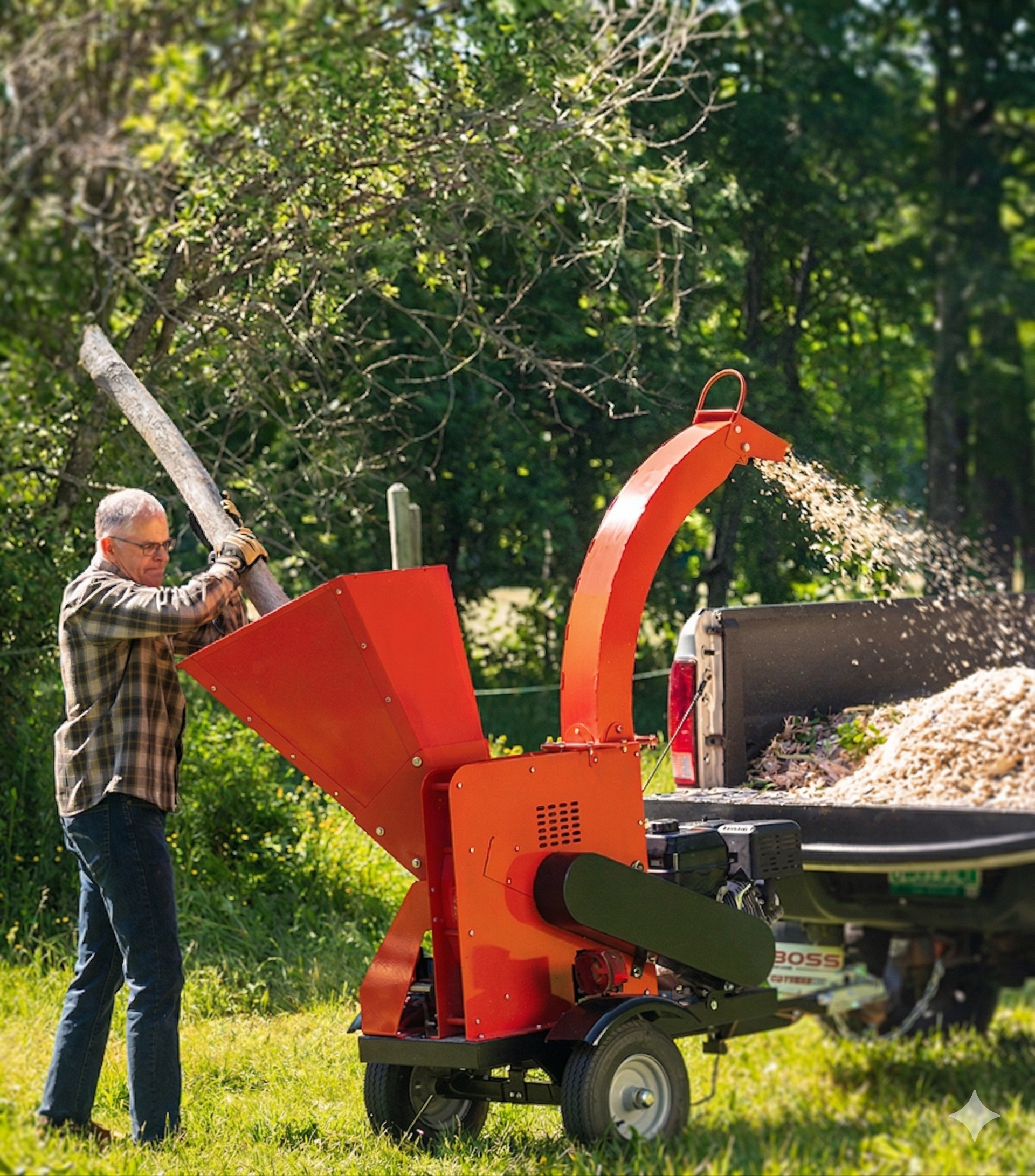
Wood chipper capacity ratings are expressed in inches — but what do those numbers actually mean for your real workload? Choosing the wrong wood chipper size is the most common purchasing mistake. This guide explains what each wood chipper capacity rating means in practice, so you can match the right wood chipper to your branches.
What Wood Chipper Capacity Actually Means
The wood chipper size rating — or capacity rating — refers to the maximum diameter of branch the machine can accept through its infeed opening and process through its cutting mechanism. A 3-inch chipper can handle branches up to 3 inches in diameter. A 6-inch chipper handles branches up to 6 inches. The number reflects a physical limit — the size of the infeed throat and the power of the cutting mechanism.
This sounds simple, but there are two important nuances that many buyers overlook.
First: The rated capacity is a maximum, not a recommended operating target. Consistently feeding material at the absolute limit of the machine's rating places maximum stress on the blades, engine, and cutting mechanism. Manufacturers design their machines to handle the rated diameter, but doing so repeatedly and continuously will shorten blade life and increase wear rates. For comfortable daily use, choose a wood chipper rated somewhat above the branch diameter you work with most of the time.
Second: Branch diameter and branch density are not the same thing. A 3-inch green hardwood branch — say, fresh-cut oak — places significantly more resistance on the cutting mechanism than a 3-inch dry softwood branch. Some manufacturers rate capacity using softwood under controlled conditions. If you regularly process dense hardwood, factor that into your model selection.
3-Inch Wood Chipper: What It Handles in Practice
A 3-inch wood chipper handles branches, limbs, and twigs up to 3 inches in diameter. In practical terms, this covers routine garden maintenance, light tree trimming, small fruit tree pruning, hedge clearing, and seasonal cleanup of fallen small branches. It is the right tool for a homeowner with a medium-sized residential property who wants to process regular garden debris rather than haul it away.
What a 3-inch chipper cannot handle reliably: the main limbs of a mature tree, thick storm-damaged branches, or any material that regularly exceeds 3 inches. Attempting to force material beyond the rated capacity risks blade damage, jams, and engine strain.
MAXZEM's 3-inch models — the GC6053 and CS703 — are compact, lightweight, and straightforward to move around a residential property. The CS703 includes a vacuum shredder function, which adds versatility for processing loose leaves and light debris alongside branch chipping.
5-Inch Wood Chipper: The Mid-Range Workhorse
A 5-inch wood chipper significantly expands what you can process. Branches up to 5 inches in diameter covers most of what a homeowner with a large property or a light commercial landscaping operation encounters — including the main secondary branches of mature trees, thicker storm debris, and the kinds of material that would jam or damage a 3-inch machine.
The step from 3-inch to 5-inch also typically means a larger engine, a more robust cutting mechanism, and a machine designed for more frequent use. Five-inch models are the most common choice for semi-professional and small commercial operations where the chipper is used several times per week rather than occasionally.
MAXZEM's 5-inch range includes several variants: the GC155 series drum chippers in multiple configurations, the HGC155 running a 14 HP engine for more demanding workloads, and the DGC154 disc chipper for operations where chip quality and uniformity are priorities.
6-Inch Wood Chipper: Heavy-Duty Commercial Use
A 6-inch wood chipper is a professional tool. It handles the primary limbs of large mature trees, significant storm damage, land clearing operations, and sustained high-volume branch processing. The MAXZEM GC156 is a heavy-duty drum chipper in this category — designed for commercial site clearing rather than residential use.
At this capacity level, the machine is larger, heavier, and more expensive to purchase and maintain. The additional power — typically 15 HP and above — is necessary to overcome the resistance of thick hardwood branches without stalling or damaging the cutting mechanism.
A 6-inch chipper is the right choice if you are a professional arborist, a landscaping contractor handling tree removal work, or a large property owner dealing regularly with major branch material. For occasional residential use, it is more machine than necessary — and the higher purchase price, fuel consumption, and maintenance costs reflect that.
| Capacity | Branch Diameter | Typical User | MAXZEM Models |
|---|---|---|---|
| 3-inch | Up to 3" (7.5 cm) | Homeowner, small garden, occasional use | GC6053, CS703 |
| 5-inch | Up to 5" (12.5 cm) | Large property, light commercial, regular use | GC155 series, HGC155, DGC154 |
| 6-inch | Up to 6" (15 cm) | Professional arborist, land clearing, heavy commercial | GC156 |
How to Choose the Right Wood Chipper Size for Your Workload
The most reliable method when choosing wood chipper size is to measure the branches you actually need to process most often — not the largest branch you might occasionally encounter. Take the diameter of the branches you process on a typical day and select a model rated at least one step above that. This gives you a margin of safety and ensures the machine is not constantly operating at its limit.
As a practical guide: if you are clearing garden maintenance debris and small tree prunings, 3-inch is likely sufficient. If you have mature trees on a large property and regularly deal with secondary limbs, 5-inch is the right range. If you are a contractor or land manager dealing with significant tree work on a regular basis, 6-inch is the professional standard.
The most common mistake: Buying a 3-inch chipper for material that frequently exceeds 3 inches, then wondering why the machine jams, loses power, or wears out quickly. Match the capacity to your actual workload — not to the minimum that might technically work.
Not sure which capacity fits your branches?
Send us a photo or description of the material you need to process — we can recommend the right MAXZEM model.
PRODUCTS
- - Wood Chipper
- - Log Splitter
- - Mini dumper

Looking For New Partner