
Disc Chipper vs Drum Chipper: Which One is Right for You?
Once you have decided on gas power, the next wood chipper question is the cutting mechanism. Disc and drum wood chippers work differently, produce different results, and suit different kinds of work. This guide explains exactly how each one operates so you can make the right call.
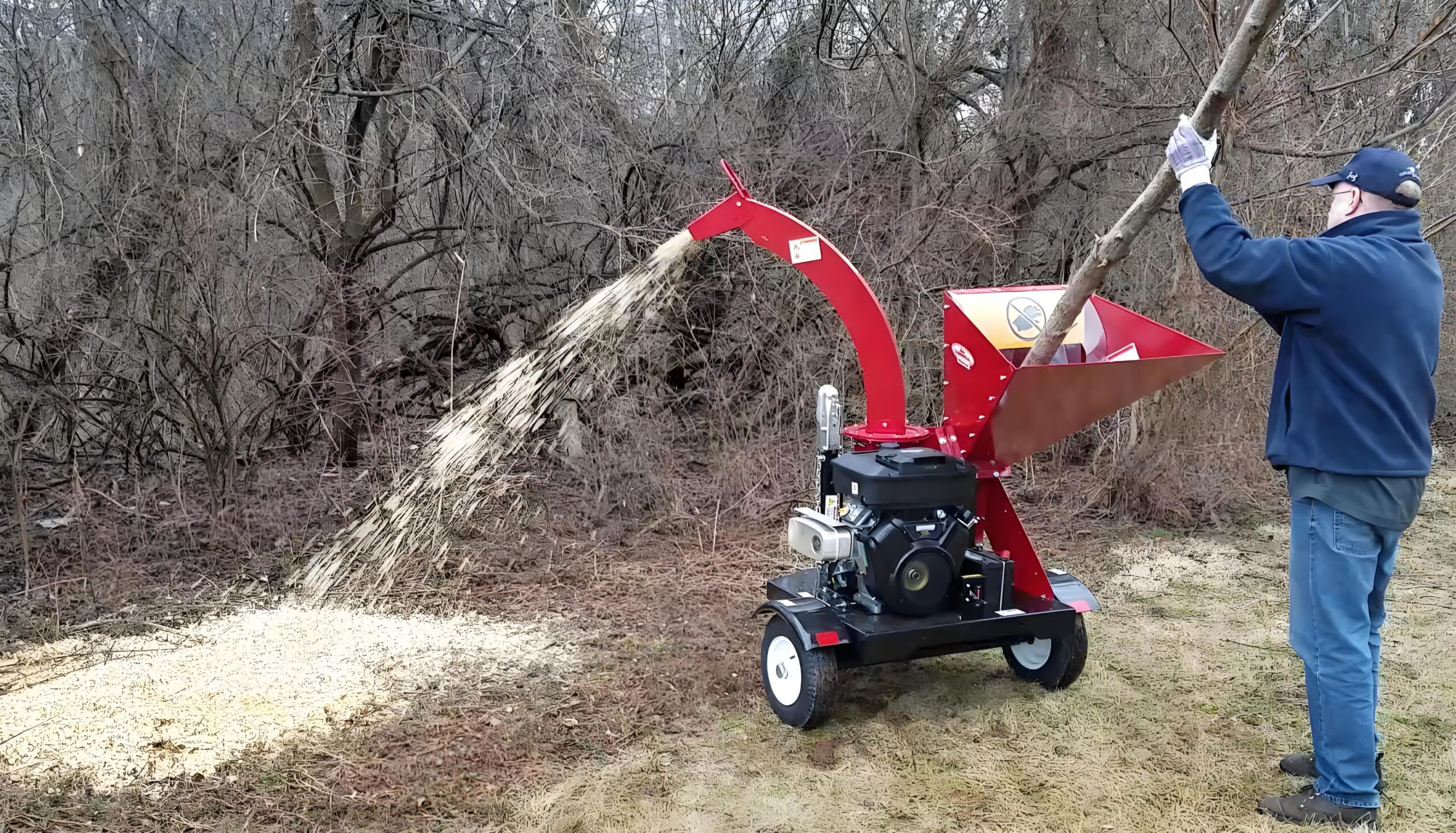
When choosing a wood chipper, the cutting mechanism is one of the most important decisions you will make. A disc wood chipper and a drum wood chipper process material differently, produce different results, and suit different kinds of work. This guide explains exactly how each wood chipper type operates.
Two Wood Chipper Mechanisms, Two Different Results
The cutting mechanism is the heart of any wood chipper — disc or drum. It determines how material is fed, how chips are produced, and how the machine behaves under load. Both disc and drum wood chipper designs accomplish the same end goal — reducing branches to chips — but they go about it in fundamentally different ways. Understanding those differences helps you choose the right tool for your specific situation.
How a Disc Wood Chipper Works
A disc chipper mounts its cutting knives on the face of a large, heavy steel disc. As the disc spins, branches are fed against the blades at a fixed angle — typically around 45 degrees — and each knife takes a slice as it passes the material. The disc itself acts as a flywheel, storing rotational energy between cuts. This flywheel effect keeps the cutting speed consistent even when branch thickness varies.
Because the cutting plane is fixed and each slice happens at the same angle and depth, disc chippers produce notably uniform chips. This predictability in output is one of the key reasons disc designs are preferred when chip quality matters — for example, when the output will be sold as landscaping mulch or used in biomass processing where consistent chip size is a specification requirement.
Disc Chipper Strengths
- Uniform chip output: Each cut happens at the same angle, producing consistent chip size. This is important when the output will be used as mulch or processed further.
- Energy efficiency: The disc's flywheel stores rotational energy, meaning less fuel is needed to maintain cutting speed through the material.
- Compact and lighter: Disc designs tend to be smaller and lighter than equivalent-capacity drum chippers, making them easier to transport and store.
- Discharge distance: The large rotating disc acts as a fan, throwing chips further from the machine — useful when loading directly into a truck or trailer at a distance.
- Simpler cutting geometry: The anvil and knife alignment is straightforward, and blade access is relatively easy on most designs.
Disc Chipper Limitations
- Sensitive to blade sharpness: A disc chipper loses efficiency quickly with dull blades. Maintaining sharp knives is more critical than on drum designs.
- Less suited to forked or tangled material: Branches with forks, sharp curves, or heavy foliage can jam a disc chipper more readily than a drum design.
- Controlled feed required: The disc cuts as you push material in, rather than pulling aggressively. Operators need to feed material steadily — the machine does not do the work of pulling branches in on its own.
How a Drum Wood Chipper Works
A drum chipper mounts knives on a rotating cylindrical drum oriented horizontally across the feed path. As the drum spins, it grabs incoming branches and pulls them inward — this self-feeding action is one of the drum's defining characteristics. The knives shave chips continuously as the material passes the anvil, cutting along the grain of the wood rather than across it.
This continuous pulling and cutting action makes drum chippers well-suited to high-volume work. Once the drum catches a branch, the operator's physical effort drops significantly — the machine takes over. This matters during long clearing sessions where operator fatigue becomes a factor.
Drum Chipper Strengths
- Strong self-feeding: The drum pulls material in aggressively once it catches. This reduces operator effort and speeds up processing, particularly with large volumes of material.
- Handles irregular material: Forked branches, crooked limbs, and brushy material feed better into a drum chipper. Less trimming and prep work is needed before feeding.
- Higher throughput for long sessions: The continuous cutting action and self-feeding make drum chippers faster when clearing large piles over extended periods.
- Tolerates slightly dull blades: Drum chippers can continue operating effectively slightly longer with less-than-perfect blades compared to disc designs, though sharp blades are still recommended for best performance.
- Larger infeed throat: Drum chippers typically have wider infeed openings, which helps with larger-diameter branches and awkward material shapes.
Drum Chipper Limitations
- Less uniform chip output: Because feed rate and branch shape affect chip length, drum chips can vary more in size. This is rarely a problem if the chips are being disposed of, but matters if consistent chip quality is required.
- Heavier and bulkier: Drum chippers are generally heavier than equivalent-capacity disc models, which makes transportation slightly more demanding.
- Strong pull force requires caution: The aggressive inward pull that makes drum chippers efficient also creates a safety consideration. Loose clothing, gloves, or hair can be caught. An emergency stop switch is essential.
Disc Chipper vs Drum Chipper: Side-by-Side Comparison
| Factor | Disc Chipper | Drum Chipper |
|---|---|---|
| Chip Uniformity | ✔ Very uniform | Moderate — varies with feed |
| Self-Feeding Action | Manual feed required | ✔ Strong inward pull |
| Handles Forked / Twisted Branches | ✘ More prep needed | ✔ Feeds well |
| Energy Efficiency | ✔ Flywheel stores energy | Higher energy per cut |
| Blade Sharpness Sensitivity | High — performance drops quickly | Moderate — more forgiving |
| Machine Weight | ✔ Lighter | Heavier |
| Discharge Distance | ✔ Throws chips further | Shorter throw |
| Best For | Uniform mulch, residential, lighter use | High volume, pro crews, mixed material |
Which Wood Chipper Should You Choose?
The answer depends on two things: what you are chipping, and what you plan to do with the output.
Choose a disc wood chipper if: your branches are reasonably straight and consistent in size, you need uniform chip quality for mulch or resale, you value a lighter and more compact machine, or your workload involves moderate volumes rather than continuous high-intensity clearing.
Choose a drum wood chipper if: you are processing large volumes of material in long sessions, your branches are forked, bushy, or irregular in shape, reducing operator fatigue matters over a full working day, or chip uniformity is less important than throughput speed.
MAXZEM offers both: The DGC154 is a 5-inch disc wood chipper producing high-quality uniform output. The GC155 series and GC156 are drum chippers covering 5-inch and 6-inch capacity respectively — designed for self-feeding, high-volume work. If you are unsure which suits your situation, our team can help you decide based on your specific material and workload.
Need help choosing between disc and drum?
Tell us your branch type and workload — we'll recommend the right MAXZEM model.
PRODUCTS
- - Wood Chipper
- - Log Splitter
- - Mini dumper

Looking For New Partner