
Best Wood Chipper Buying Guide for 2026: Gas vs Electric & What to Check Before You Buy
A gas wood chipper is a significant investment. Getting the wrong one means constant jams, underpowered cutting, or a machine far too large for your actual needs. This guide walks you through the most important decision — gas vs electric — and covers five key features to verify before you spend a dollar.
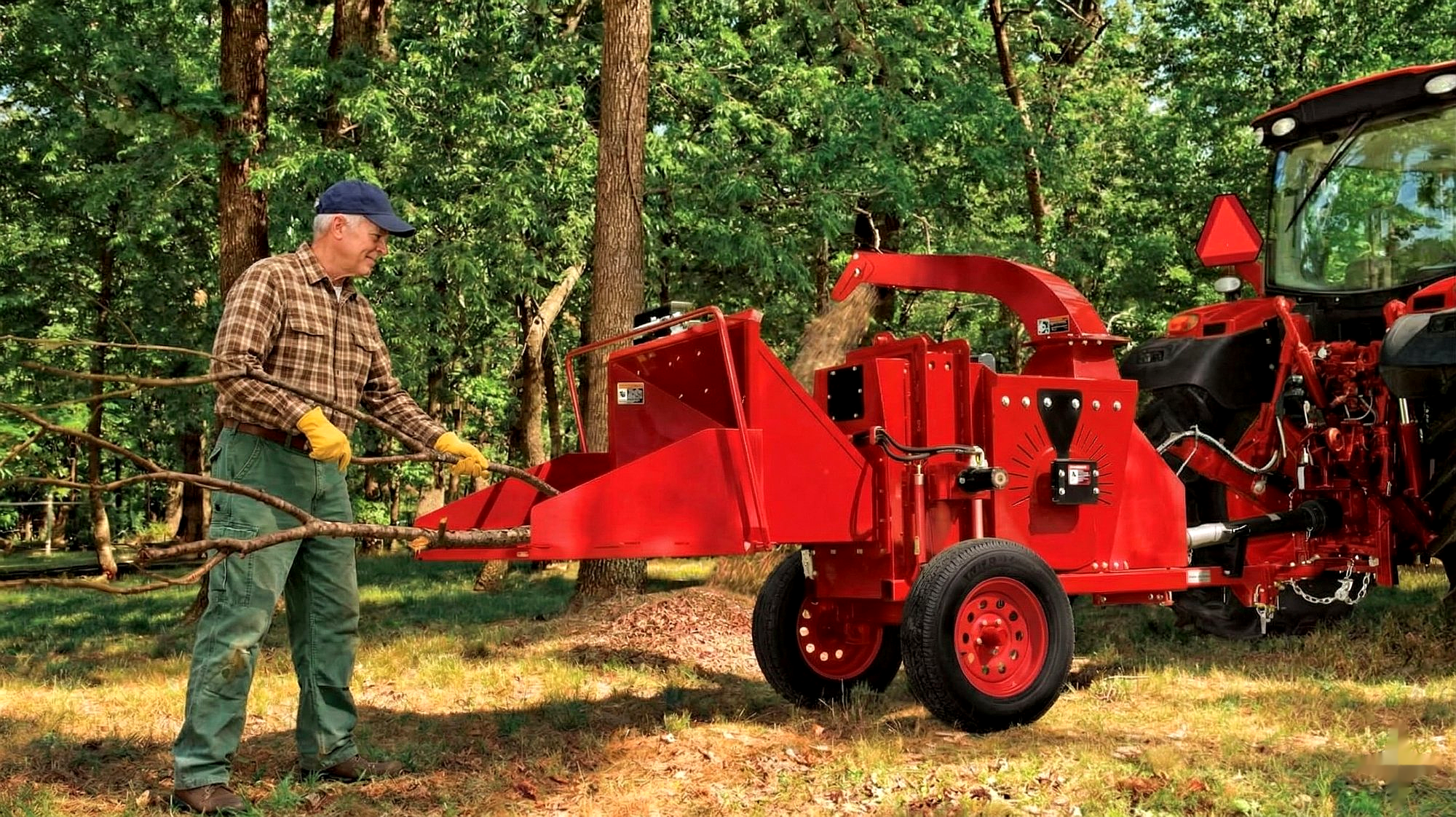
This wood chipper buying guide covers the most important decisions you face when choosing a wood chipper. From gas vs electric power to engine size and safety features, every factor that determines whether a wood chipper suits your workload is explained here in plain terms.
What Does a Gas Wood Chipper Actually Do?
A wood chipper takes branches, limbs, and yard debris and reduces them into small chips or mulch. The output is useful — it can be spread as ground cover in garden beds, added to a compost pile, or used as path material on a property. The alternative is hauling waste to a skip or burning it, both of which are more time-consuming and costly. The right chipper turns what used to be a disposal problem into a usable material.
Chippers vary significantly in what they can process. A small electric model handles light garden twigs. A large commercial gas wood chipper can devour whole tree limbs and storm debris. Knowing where your workload sits on that spectrum is the starting point for every buying decision.
The First Decision: Gas vs Electric Wood Chipper
When buying a gas wood chipper, the first decision is power source — gas or electric. This choice determines capacity, mobility, maintenance load, and total cost of ownership. It determines capacity, mobility, maintenance load, and total cost of ownership over the machine's life.
Gas Wood Chippers: Power, Mobility and Capacity
Gas chippers run on a combustion engine and are the dominant choice for anyone dealing with regular, heavy branch clearing. They are not constrained by a power cord, which matters enormously on larger properties where branches may be far from an outlet.
- Capacity: Gas models typically handle branches from 3 inches up to 6 inches in diameter. Some professional models go beyond that. This is the range relevant for most tree trimming, storm cleanup, and land clearing tasks.
- Mobility: Without a cord, the machine can go anywhere on the property. Wheels and a tow hitch make moving it between locations straightforward.
- Continuous operation: Refuel as needed and keep working. There is no battery to deplete, no cord to extend.
- Maintenance: Oil changes, air filter cleaning, spark plug replacement, and blade sharpening are required on a regular schedule. This adds time and cost but is manageable with routine attention.
- Noise: Gas engines are significantly louder than electric motors. Ear protection is not optional.
- Best for: Anyone with a medium to large property, branches over 2 inches thick, or workloads that require mobility away from power outlets.
Electric Wood Chippers
Electric chippers plug into a standard wall outlet. They are lighter, quieter, and produce no exhaust fumes. For small residential gardens with light pruning needs, they are a practical and economical solution.
- Capacity: Most electric models handle branches up to 1.5 to 2 inches in diameter. This suits light seasonal pruning and garden trimming, but not heavy branch clearing.
- Noise: Significantly quieter — more suitable for use in residential areas with close neighbours or noise restrictions.
- No emissions: No exhaust fumes, making them safe for enclosed or semi-enclosed spaces.
- Low maintenance: No engine oil, no fuel system, no spark plugs. Blade checks and occasional cleaning are the main tasks.
- Limitations: Cord length restricts where you can work. Power output cannot match gas equivalents. Not suitable for thick, green, or knotty wood.
- Best for: Small urban or suburban gardens, light seasonal cleanup, users with no need to process branches over 2 inches thick.
| Factor | Gas Chipper | Electric Chipper |
|---|---|---|
| Branch Capacity | 3" – 6"+ diameter | Up to 1.5" – 2" diameter |
| Mobility | ✔ Fully cordless | ✘ Cord-limited |
| Noise Level | ✘ High — ear protection needed | ✔ Low |
| Exhaust / Fumes | ✘ Yes | ✔ None |
| Maintenance Required | Oil, filter, plug, blades | Blade checks only |
| Continuous Use | ✔ Refuel and continue | ✘ Cord / outlet dependent |
| Purchase Price | Higher | Lower |
| Best For | Medium–large properties, thick branches | Small gardens, light pruning |
Simple rule: If your branches are regularly thicker than 2 inches, or if you need to work away from power outlets, gas is the correct choice. If your yard is small and your branches are light, electric is cleaner and simpler.
5 Wood Chipper Features to Check Before You Buy
Once you have settled on gas or electric, these five specifications determine whether a specific model suits your actual workload.
1. Chipping Capacity — Match It to Your Branches
The chipping capacity is the maximum branch diameter the machine can handle. It is the single most important specification to verify against your real-world needs. Most residential gas chippers are rated at 3 inches. Mid-range models reach 5 inches. Heavy-duty commercial units handle 6 inches and above.
An important practical note: treat the rated capacity as a maximum, not a target. Feeding branches at the absolute limit of the machine's rating puts maximum stress on the blades and engine. For comfortable daily use, choose a model rated slightly above the branch diameter you actually work with most frequently.
2. Engine Power — HP and CC
For gas models, horsepower (HP) and engine displacement (CC) determine how much resistance the machine can overcome without bogging down or stalling. A 6–7 HP engine handles standard residential use without issue. For larger branches or more demanding commercial workloads, 10 HP and above provides the power headroom needed to work consistently without strain.
MAXZEM's range runs from compact models with standard RATO engines up to 15 HP units for heavy-duty drum chipping. All use RATO engines — a globally established engine brand with parts available worldwide, which matters for long-term maintenance costs and availability.
3. Safety Features
Wood chippers involve rotating blades moving at 1,000 to 2,000 RPM and a feed mechanism capable of pulling material in at high speed. Safety engineering is not optional — it determines how safely the machine can be operated daily. Look for an emergency stop switch within reach of the operator, protective covers over the cutting disc or drum, a hopper design that keeps hands at a safe distance from the blades, and a centrifugal clutch that protects the engine from torque shock during jams.
4. Discharge Chute Direction
A fixed discharge chute forces you to position the machine carefully at the start of each job and move material collection to where the chute points. A 360-degree rotating discharge chute lets you direct chips into a trailer, garden bed, or collection area from any angle — significantly reducing the cleanup time after chipping. If you plan to collect and use the chips, a rotating chute is a meaningful practical advantage.
5. Wheels and Portability
For small residential properties, basic wheels on a flat surface are adequate. For larger properties, uneven terrain, or worksites, check that the machine has heavy-duty all-terrain wheels capable of handling soft ground and slopes. Some MAXZEM models are mounted on reinforced chassis with wide-tread tyres specifically for muddy construction sites and remote forest trails.
Not sure which model fits your needs?
Our team can help you match the right chipper to your workload and budget.
Which MAXZEM Gas Wood Chipper Fits Your Workload?
MAXZEM produces gas-powered wood chippers across a full capacity range. All models use RATO engines with global parts availability. Here is a brief overview matched to the factors covered above:
- GC6053 / CS703 — 3-inch compact: Entry-level gas chippers for homeowners dealing with regular garden maintenance and branches up to 3 inches. Lightweight and straightforward to move around.
- GC155 series / HGC155 — 5-inch drum: Mid-range machines for larger residential properties and light commercial use. The HGC155 runs a 14 HP engine for more demanding material volumes.
- GC156 — 6-inch heavy-duty drum: The highest-capacity model in the MAXZEM range. Suited to professional site clearing and high-volume branch processing.
- DGC154 — 5-inch disc: Disc cutting mechanism producing uniform chip output — a good fit when chip quality matters, such as for landscaping mulch supply.
Gas Wood Chipper Buying Summary
Start with the power source decision — gas if you need real cutting power and mobility, electric if your needs are light. Then check the five features above: capacity, engine power, safety systems, discharge chute, and wheel type. Match those specifications to your actual workload rather than buying the largest model available. An oversized chipper wastes money; an underpowered one wastes time.
If you want guidance on which gas wood chipper suits your specific site and branch diameter, contact the MAXZEM team directly on WhatsApp — we can narrow it down to two or three options based on what you actually need to process.
PRODUCTS
- - Wood Chipper
- - Log Splitter
- - Mini dumper

Looking For New Partner